Orlando structures present distinct operational conditions during remediation due to year-round relative humidity and dense community living. In multi-story properties across Baldwin Park, Thornton Park, and College…
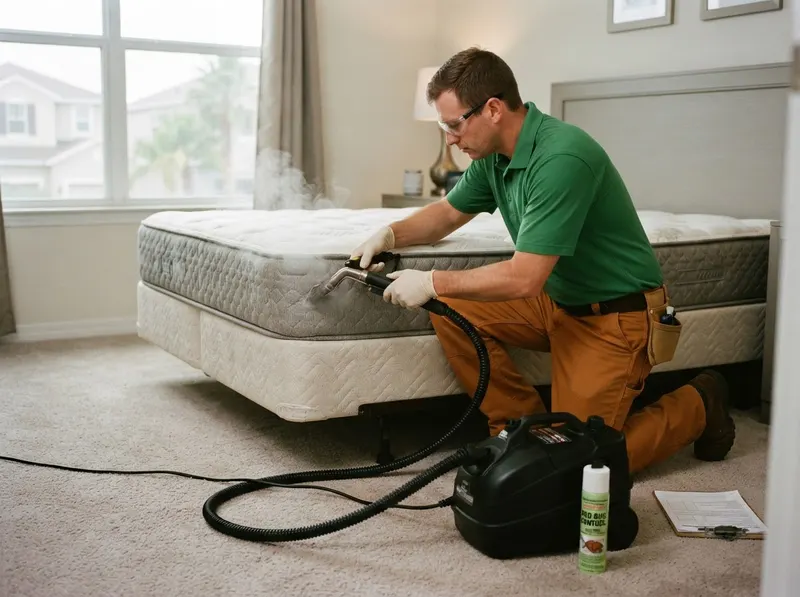
Orlando structures present distinct operational conditions during remediation due to year-round relative humidity and dense community living. In multi-story properties across Baldwin Park, Thornton Park, and College Park, bed bugs rapidly navigate plumbing chases and shared conduits. Sustained thermal execution operates by raising indoor core temperatures between 122°F and 135°F using industrial convective blowers and monitored thermal sensors. This ambient threshold denatures insect cellular proteins and desiccates egg clutches hidden deep within subfloors, crown molding, and wall voids that topical aerosol sprays fail to reach.
Decision-fit considerations determine whether a property requires standalone thermal heating, targeted liquid chemical remediation, or a combined hybrid approach. Whole-structure thermal treatment is selected when an immediate single-day reset is necessary, particularly for occupied rental units or furnished single-family residences in Lake Nona and Dr. Phillips. The operational trade-off is rigorous interior preparation: heat-sensitive items including candles, vinyl blinds, aerosol cans, prescription medicines, and oil paintings must be removed or insulated before heating begins. Conversely, standalone chemical remediation suits localized single-room occurrences in Delaney Park or SoDo, offering lower upfront investment and zero risk to delicate possessions, though it requires multiple visits spaced over 14 to 21 days to break the reproductive hatching cycle.
Combined hybrid protocols deliver the highest eradication rate against pesticide-resistant insect populations in MetroWest and Audubon Park. Heat eliminates the existing population and vulnerable egg clusters within 8 hours, while a follow-up perimeter band of non-repellent liquid and desiccant dust protects against re-entry. Technicians place dynamic temperature monitors across cold spots, such as exterior walls and dense subflooring, ensuring every square inch reaches the 122°F lethal limit before cool-down begins.
Every job gets a firm, written price after a free on-site visit.
Tell us about your bed bug thermal and chemical eradication job in Orlando and we'll send a clear, written quote, usually the same day.
 PestPatrol Pro