Securing a professional pest control service in Orlando is critical due to Central Florida's persistent humidity, high water tables, and extended warm seasons that foster aggressive insect colonies. Single-encounter pest discoveries typically indicate hidden nests within wall cavities, blown-in attic insulation, or exterior mulch beds.
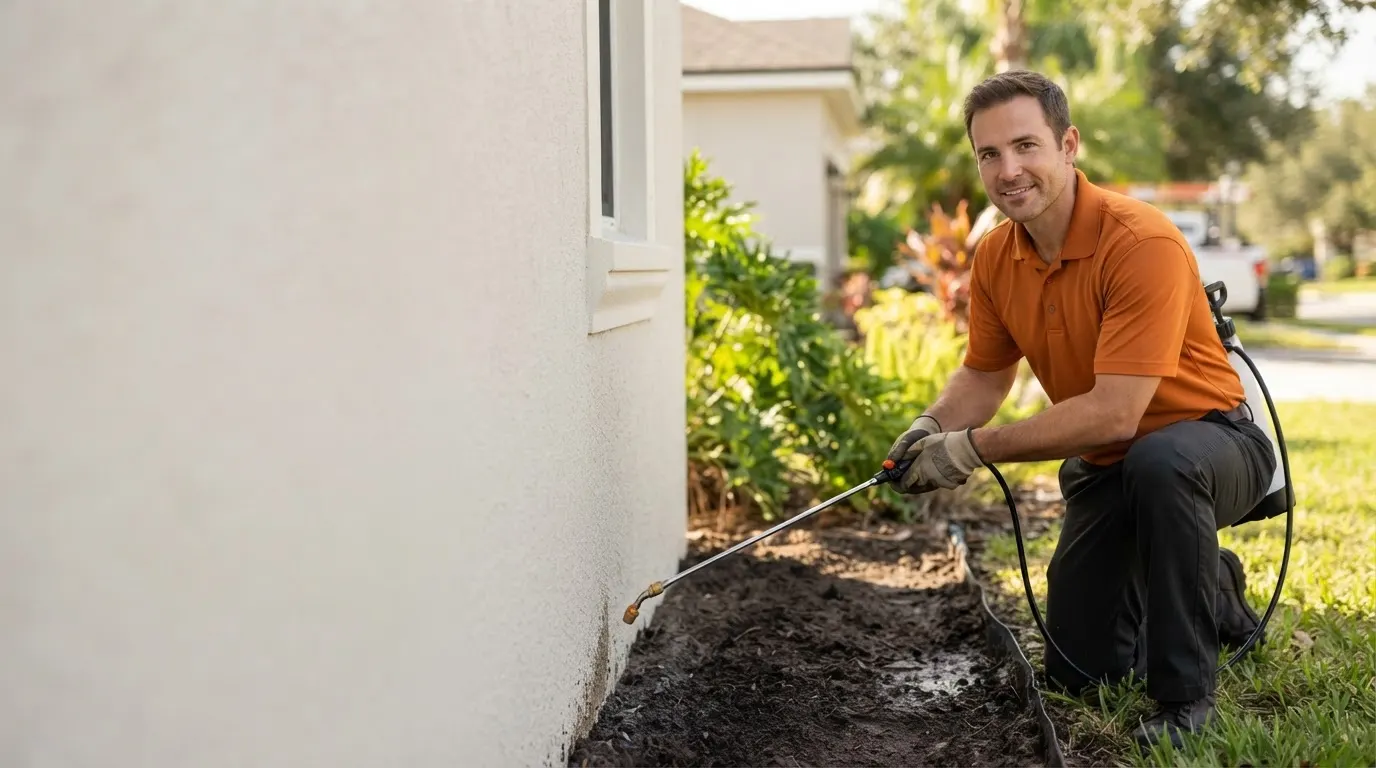
A professional pest control service in Orlando is an integrated pest management and targeted chemical remediation system engineered to eliminate subtropical insect infestations, wood-destroying organisms, and structural rodent intrusions across Orange County properties.
Every service reflects the same meticulous attention to detail, whether it's a single job or a larger pest control service project across Orlando.
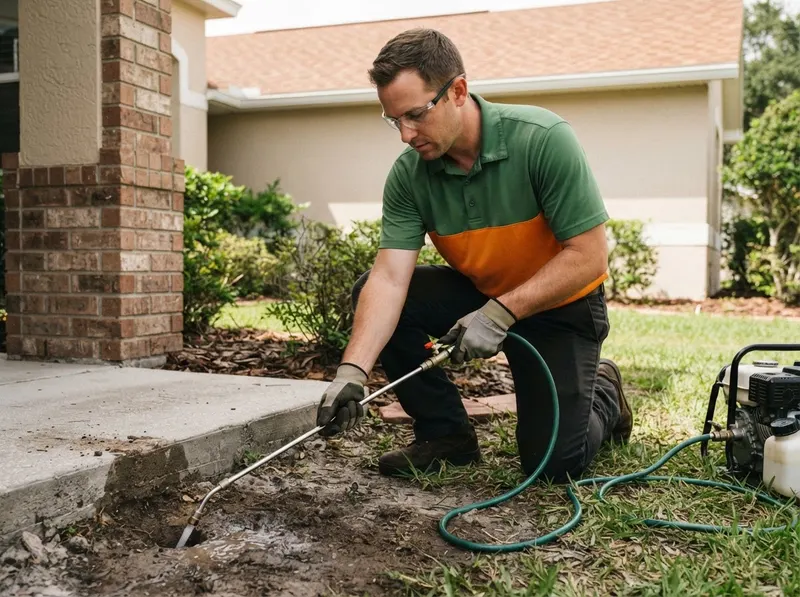
Subterranean termite defense stops structural wood damage through liquid termiticide trenching along foundation footings and targeted slab injections. Central Florida sandy soils allow subterranean workers to travel upward through invisible hairline slab cracks, expansion joints, and bath trap rough-ins. Technicians excavate continuous trenches along the foundation perimeter, inject non-repellent termiticides such as fipronil at label volume, and treat plumbing penetrations to eliminate entire subterranean colonies within 60 to 90 days.
Get a quote →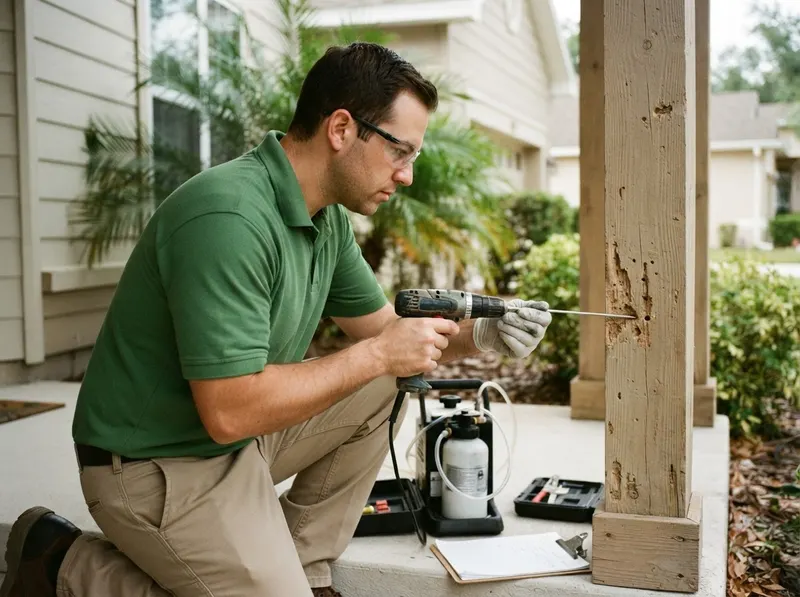
Drywood termite spot remediation isolates and neutralizes localized colonies inside exposed rafters, roof decking, door jambs, and decorative wood framing without mandatory whole-structure tent fumigation when colonies remain confined. Technicians identify active galleries via fecal pellet frass patterns, drill pinpoint access ports directly into infested timber voids, and inject pressurized expanding borate foam formulations that saturate interior nesting chambers, destroying reproductive alates and nymphs upon contact.
Get a quote →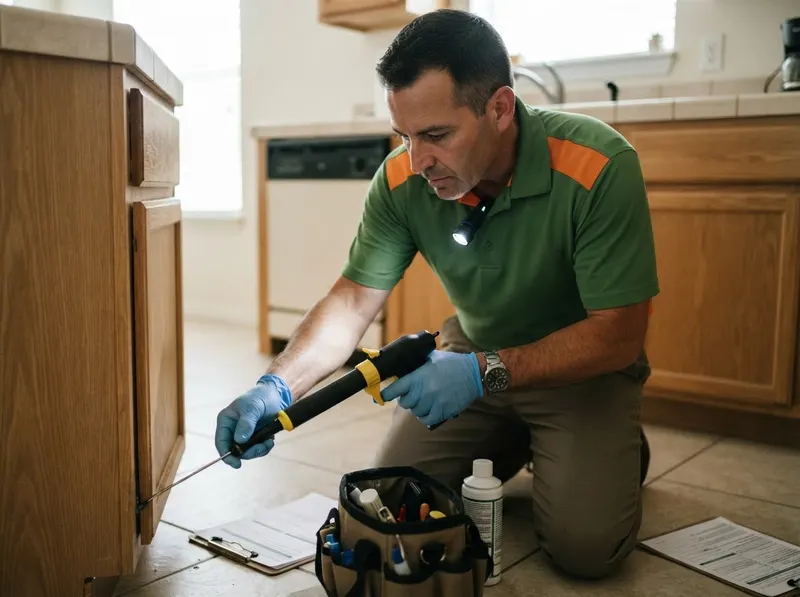
American cockroach and smokybrown roach eradication halts persistent indoor migration from landscape mulch, palm fronds, and municipal drainage lines into Orlando kitchens, laundry rooms, and bathrooms. Treatment utilizes insect growth regulators paired with moisture-resistant microencapsulated perimeter barriers and abamectin-based food attractant gels applied directly into cabinetry hinges, plumbing chases, crawl access points, and sub-counter voids to shut down reproductive cycles.
Get a quote →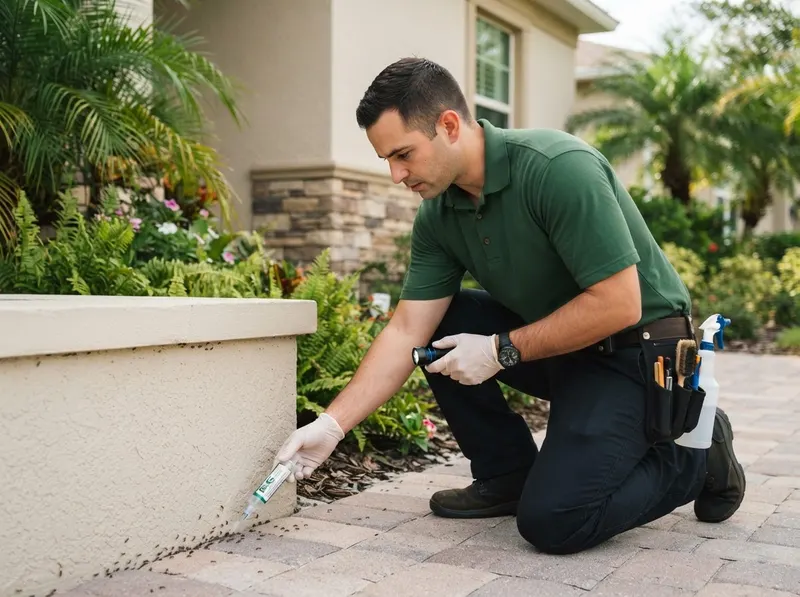
Indoor ant eradication targets trailing sugar ants, ghost ants, and Argentine ants using low-toxicity, non-repellent transfer chemistry. Standard contact sprays cause budding, which splits single ant colonies into multiple competing nests throughout wall cavities. Specialized slow-acting liquid and gel matrices allow foraging workers to transport the active material back into the primary queen chamber, achieving complete systemic colony collapse within 14 to 21 days.
Get a quote →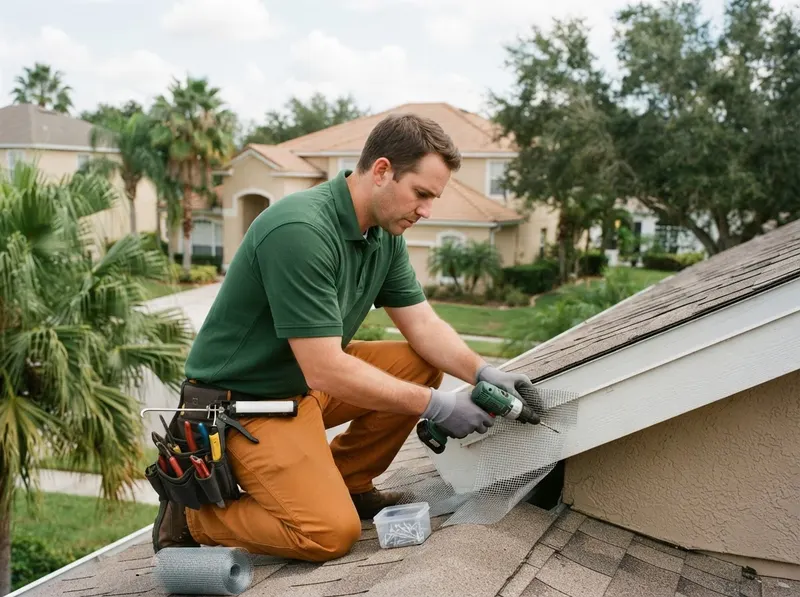
Attic rodent management removes active roof rat populations and physically seals structural vulnerabilities larger than one-quarter inch across the building envelope. Technicians identify entry points along tile roof ridge caps, eave junctions, soffit gaps, and AC line-set chaseways. Technicians install heavy-gauge zinc-coated steel hardware cloth, backer rod, and elastomeric sealants, positioning mechanical snap traps along high-traffic attic runways for immediate, poison-free extraction.
Get a quote →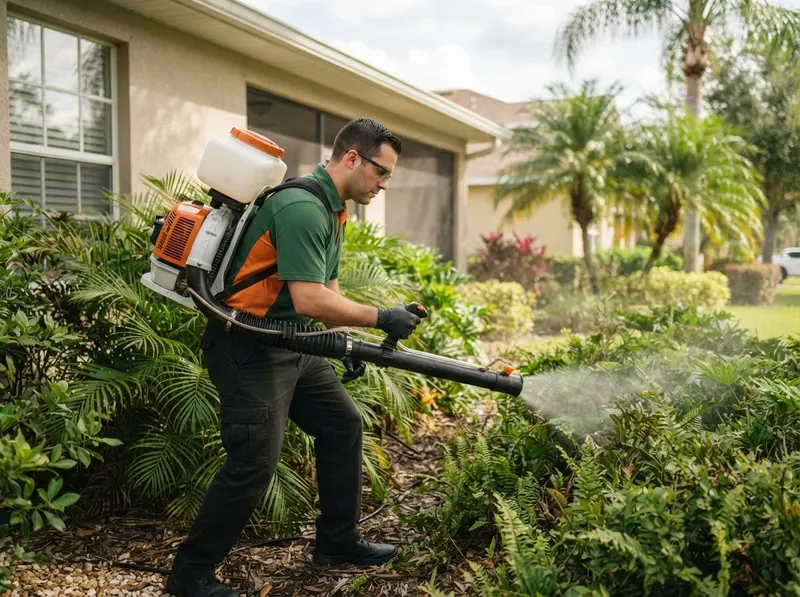
Exterior mosquito control suppresses adult biting populations and prevents waterborne larval maturation across shaded foliage, pool enclosures, and property retention boundaries. Specialized gas-powered mist blowers distribute microencapsulated adulticides to the underside of broad-leaf vegetation, combined with biological larvicide dunks placed in standing drainage swales, gutters, and decorative plant saucers to disrupt the mosquito breeding cycle before emergence.
Get a quote →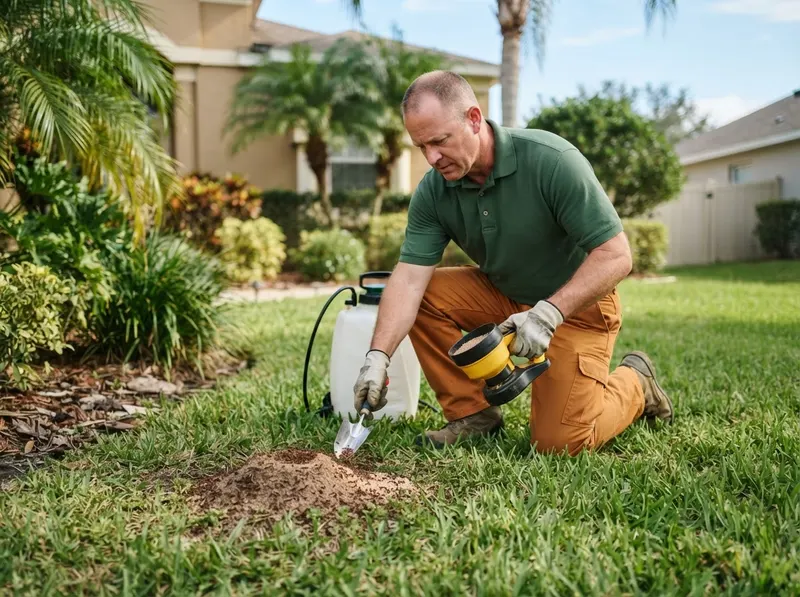
Whole-property fire ant management neutralizes active mound clusters and establishes an invisible surface defense across turfgrass, garden borders, and landscaping beds. Technicians distribute methoprene insect growth regulator granular baits to sterilize laying queens, followed by high-volume fipronil-infused perimeter treatments that protect domestic play lawns, patio borders, and pet runs against aggressive stinging colonies for up to 12 consecutive months.
Get a quote →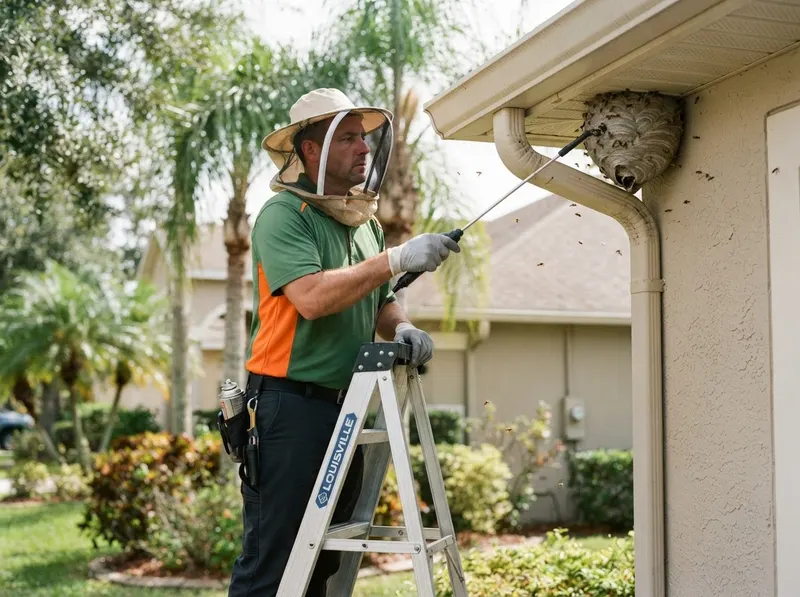
Paper wasp, mud dauber, and yellow jacket removal clears aerial combs and sub-fascia hives from high-traffic domestic entryways, screen enclosures, second-story eaves, and rooflines. Specialized aerosol freezing compounds neutralize aggressive defenders instantly from distances up to 20 feet, allowing physical scraping, structural sanitization, and application of residual repellent sprays to stop rebuild attempts throughout the long Central Florida summer.
Get a quote →You get a firm, itemized quote for your pest control service before any work begins, no surprises, no pressure.
Careful prep, tidy work, and a full cleanup when we are done. We treat your home and belongings like our own.
The same trusted, background-checked team from the first call to the final check.
Selecting the appropriate extermination methodology in Orlando requires diagnosing the precise biological vector, the structural access point, and the nesting habits of the invading species. If treating acute subterranean termite activity or localized wood-destroying insect damage, choose a targeted liquid soil barrier injection and borate structural treatment; if resolving widespread general pests like American cockroaches, ghost ants, or silverfish, choose a perimeter microencapsulated exterior wash paired with targeted interior crack-and-crevice gel baits. The trade-off between these protocols centers on application geography and invasive scope: soil injections focus exclusively on ground-level foundation footings and subterranean entry routes beneath monolithic concrete slabs, requiring specialized drilling along attached exterior patios, whereas broad-spectrum perimeter treatments establish a residual horizontal apron 3 feet up the exterior stucco and 3 feet out into turf or landscaping beds to intercept routine migration driven by summer afternoon downpours.
If German cockroaches have established an interior infestation inside kitchen cabinetry and electrical appliances, choose an intensive indoor clean-out combining insect growth regulators, microencapsulated suspension sprays, and abamectin gel placements over routine exterior spraying. The trade-off requires direct access to all interior cabinetry, pantry shelves, and plumbing chases, exchanging rapid external convenience for exhaustive internal decontamination. For roof rats or outdoor rodents nesting in blown-in attic insulation, physical barrier exclusions combined with interior mechanical capture must take precedence over surface chemical sprays, exchanging rapid topical insect suppression for multi-point architectural sealing along soffits, roof returns, and fascia gaps.
If managing heavy mosquito breeding or lawn-damaging turf pests across outdoor living spaces, choose dedicated yard atomization misting paired with granular soil treatments rather than foundation-only barrier sprays. Foundation sprays protect the home's interior threshold but leave outer turf, ornamental shrubs, and lanai perimeters vulnerable to re-infestation from adjacent neighborhood drainage easements.
Every project gets a firm, written price after a free on-site visit. Ranges below for orientation.
Tell us about your pest control service job and we'll send a clear, written quote, usually the same day. Or just call and talk to a real Orlando pro.
(407) 751-3338
Properties across Orange County face unique structural pest pressures dictated by distinct local architectural styles and microclimates. Neighborhoods surrounding historic bodies of water like Lake Ivanhoe, Lake Eola Park, and Lake Sue in College Park, Thornton Park, and Delaney Park feature classic wood-frame bungalows and mid-century residences built on raised crawlspaces or conventional slabs, frequently shaded by hundred-year-old live oak canopies. These dense canopies drop heavy organic debris on roofs and create direct aerial bridges for roof rats, carpenter ants, and drywood alate swarms seeking roof deck access points. In contrast, planned developments across Lake Nona, Baldwin Park, and Dr. Phillips contend with high subterranean water tables and expansive sandy soils surrounding reclaimed retention corridors. These suburban slab-on-grade stucco homes frequently develop hairline shrinkage cracks beneath interior tile and luxury vinyl flooring, providing open subterranean termite pathways directly from wet foundation beds into perimeter wall framing. Mulch beds installed adjacent to exterior stucco weep screeds along roads like Conroy Road, Orange Avenue, and Narcoossee Road retain intense moisture from afternoon thunderstorms, accelerating wood-decay fungi and creating ideal reproductive micro-habitats for smokybrown roaches and ghost ant super-colonies.
Free estimates for Orlando & the surrounding area.
 PestPatrol Pro